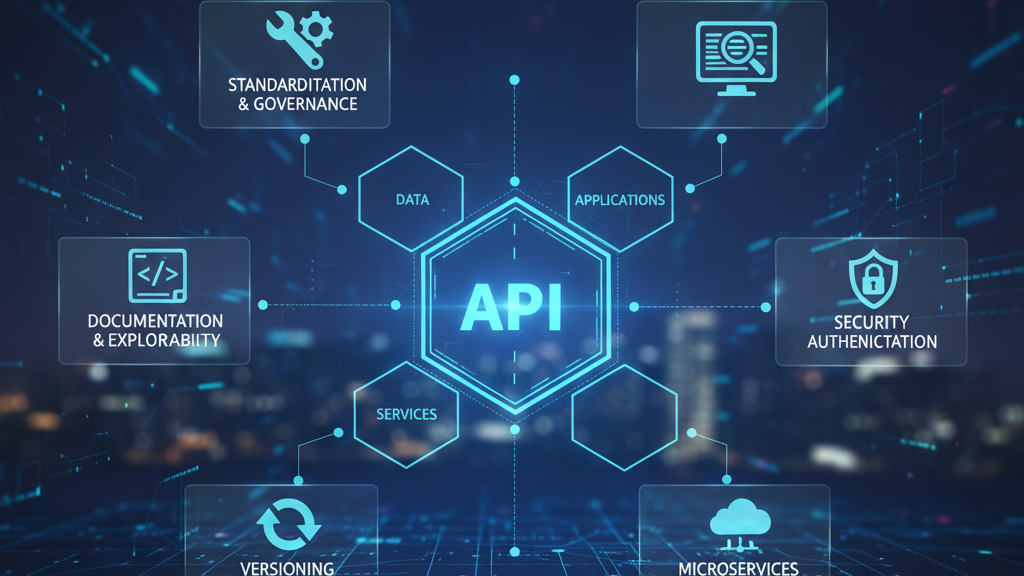
The Future of Data Collection in API-First Content Systems


Data collection is becoming one of the most important functions in modern digital ecosystems, but the way businesses collect, structure, and use data is changing rapidly. Organizations no longer operate through a single website or a small set of static channels. They now manage customer interactions across apps, websites, portals, e-commerce environments, connected devices, support centers, and many other touchpoints. At the same time, expectations around privacy, personalization, speed, and relevance continue to rise. This creates a more demanding environment where data collection can no longer rely on rigid systems or disconnected processes. Businesses need more flexible foundations that can support change without creating fragmentation.
API-first content systems are increasingly becoming that foundation. Because they separate content from presentation and make structured information available across channels through APIs, they provide a more scalable architecture for modern digital experiences. This flexibility does not only affect content delivery. It also shapes the future of data collection. As organizations move toward more dynamic, modular, and omnichannel ecosystems, API-first content systems are helping redefine how user interactions are tracked, how content-related data is connected, and how digital experiences become more measurable. The future of data collection will not simply be about gathering more information. It will be about gathering better information through systems that are more structured, more adaptable, and more aligned with how modern digital environments actually work.
Why Traditional Data Collection Models Are Becoming Less Effective
Traditional data collection models were often built around single-channel experiences and tightly coupled digital systems. In those environments, businesses could depend on one website, one set of templates, and one relatively stable set of user journeys. Data collection was often tied directly to those environments, which made it functional for the time but far less adaptable as digital ecosystems expanded. Once new apps, devices, portals, and third-party experiences entered the picture, many organizations found that their older models were too rigid to support a clear and unified view of user behavior. Tools such as a Management API can help address this rigidity by giving teams more flexible ways to organize, update, and distribute content and data across growing digital ecosystems.

This is one of the main reasons traditional approaches are becoming less effective. The modern customer journey is distributed, and the systems behind it need to reflect that reality. If data collection remains locked inside isolated platforms, teams end up with fragmented insights and inconsistent reporting. They may understand what happened on one channel without understanding how it connects to the broader journey. API-first content systems help solve this by creating a shared content and delivery foundation that works across touchpoints. That same structure makes data collection more adaptable. Instead of relying on static, page-bound tracking approaches, businesses can begin building data strategies that follow structured content and user interactions wherever they happen. This is a major shift, and it is one of the clearest signs of where the future is headed.
API-First Content Systems Create a More Flexible Data Environment
One of the biggest advantages of API-first content systems is flexibility. Content can be created centrally, structured clearly, and distributed across many interfaces without being locked into one frontend. This changes the environment around data collection in important ways. When content is no longer tied to a single presentation layer, the interactions around that content can also be understood more broadly. Businesses can track how the same content performs across multiple channels, devices, and experiences rather than treating each platform as a separate content universe.
This kind of flexibility matters because the future of data collection will depend on the ability to adapt quickly. New touchpoints will continue to emerge, customer expectations will keep shifting, and organizations will need systems that can incorporate these changes without forcing them to rebuild their measurement model every time. API-first architecture supports that by making the content layer reusable and consistent across endpoints. As a result, the data connected to that layer can also become more consistent and easier to organize. The future is likely to favor systems that are able to extend rather than restart. API-first content systems offer that kind of extension-friendly environment, which makes them especially valuable as data collection becomes more distributed, more contextual, and more dependent on digital agility.
Structured Content Will Shape the Next Generation of Data Collection
The future of data collection will rely heavily on structure. In earlier digital models, content was often treated as fixed pages or channel-specific assets, and the data collected around that content reflected the same limitations. Modern systems are moving in a different direction. Structured content models define content types, fields, relationships, and metadata in a way that makes content more reusable and machine-readable. This has important implications for how data is collected because it creates a much stronger framework for understanding what users are actually interacting with.
Instead of tracking behavior around loosely defined pages, businesses can increasingly collect data around specific content entities and structured attributes. They can understand not only that a user viewed something, but what type of content it was, what category it belonged to, what role it played in the journey, and how it related to other content objects in the ecosystem. This creates a far richer analytical environment. The future of data collection will likely involve more precise content-level measurement, not just surface-level page analytics. API-first content systems make this possible by exposing structured content through APIs and preserving the relationships that give it meaning. As digital environments become more complex, this structured approach will be essential for keeping data useful rather than letting it become increasingly vague and difficult to interpret.
Omnichannel Experiences Will Demand More Unified Data Strategies
One of the clearest trends shaping the future is the continued growth of omnichannel experiences. Users now expect to move fluidly between websites, apps, email journeys, customer portals, connected devices, and other touchpoints without feeling like they are entering separate digital worlds. This creates both an opportunity and a challenge for data collection. The opportunity is that businesses can engage users across many environments. The challenge is that collecting meaningful data across those environments requires much more coordination than older systems were designed to provide.
API-first content systems support more unified data strategies because they make it easier to maintain one structured content foundation across all of these channels. That means the same content objects, taxonomy, and metadata can appear consistently across touchpoints, which creates a stronger basis for connecting user interactions. In the future, this kind of unification will become increasingly important because businesses will not be judged by how well one individual channel performs in isolation. They will be judged by how coherent the broader experience feels. Data collection must therefore become more journey-oriented and less channel-bound. API-first systems are well suited to this because they create shared logic beneath the surface of diverse interfaces. That is exactly the kind of foundation future omnichannel measurement will need.
Metadata and Taxonomy Will Become More Important Than Ever
As content ecosystems expand, metadata and taxonomy will play a larger role in determining whether collected data is actually useful. Businesses already gather huge volumes of activity data, but raw activity alone does not create insight. The meaning of that activity depends on how well the underlying content is classified. If teams cannot reliably identify content categories, audience types, journey stages, formats, or regional differences, they will struggle to turn data into clear decisions. This is one of the reasons metadata will become more central to the future of data collection.
API-first content systems strengthen metadata and taxonomy because they make these classifications part of the content architecture rather than optional add-ons. When content is delivered through APIs, the metadata can travel with it, giving measurement systems access to a much richer set of contextual signals. This will matter even more in the future as businesses try to understand increasingly complex journeys. The value of data will depend not only on what users do, but also on what kind of content they engage with and where that content fits in a broader ecosystem. Strong metadata gives that interaction meaning. In practical terms, the future of data collection will belong to organizations that can classify their digital assets with discipline and use those classifications to produce more intelligent and more strategic analysis across channels.
Privacy Expectations Will Push Data Collection Toward More Intentional Models
The future of data collection will not be defined only by technical possibility. It will also be shaped by user expectations, regulatory pressure, and growing concern around digital trust. Businesses can no longer assume that collecting as much information as possible is a sustainable strategy. People increasingly expect greater transparency, more control, and stronger limits around how their data is gathered and used. This means future-ready data systems will need to be more intentional. They will need to support relevance without drifting into unnecessary or opaque collection practices.
API-first content systems can support this shift because they create more controlled environments for managing content, communication, and data-related experiences across channels. Consent messaging, preference flows, and privacy-related content can be managed more consistently, while structured architectures make it easier to understand where data-collection-related components appear. The future will likely reward businesses that collect with more purpose and less excess. That does not mean data collection becomes less important. It means quality, relevance, and transparency will matter more than raw volume. API-first systems are well positioned here because they allow organizations to build modular and governed experiences where data collection can be embedded thoughtfully rather than scattered unpredictably across disconnected platforms. This makes them valuable not only for scale, but also for responsibility.
Zero-Party and Preference-Based Data Will Grow in Importance
As trust becomes more central, the future of data collection is likely to include a stronger emphasis on zero-party and preference-based data. Businesses are increasingly realizing that inferred behavior has limits. A user may click on something without real interest, browse casually, or appear active for reasons that have little to do with long-term intent. In contrast, information that users intentionally provide, such as interests, goals, communication preferences, or profile details, can often be more accurate and more aligned with ethical digital practices. This kind of user-declared information is likely to become much more important in future digital strategies.
API-first content systems support this because they allow businesses to build interactive and reusable experiences across channels where users can share preferences more naturally. Preference centers, onboarding flows, account experiences, quizzes, recommendation journeys, and profile updates can all be delivered through flexible frontends while being supported by one central content system. This creates a better environment for collecting information through value exchange rather than passive observation alone. In the future, organizations will likely combine behavioral signals with more explicit user input to create a fuller picture of intent. API-first content systems will help enable that balance by supporting experiences where content and interaction design work together to gather information in a way that is clearer, more relevant, and more respectful of user choice.
Real-Time and Contextual Data Collection Will Become More Sophisticated
Another major shift in the future of data collection will be the move toward more real-time and context-aware measurement. Businesses increasingly want to understand not only what users did after the fact, but what is happening in the moment and in relation to specific content experiences. This includes how users respond to product changes, how they move through onboarding, how they interact with support content, and how specific modules or content objects influence next actions. Static reporting alone will not be enough in increasingly dynamic ecosystems.
API-first content systems make real-time and contextual collection more achievable because they deliver content in modular ways and expose structured attributes that can be measured more precisely. Instead of tracking whole pages as the main unit of interaction, businesses can increasingly track components, content objects, and journey elements with greater clarity. This will allow future systems to understand digital behavior at a more refined level. Real-time data will also become more useful when it can be tied back to structured content, because teams will be able to act faster on specific experience-level insights. The future is likely to favor organizations that can respond quickly to changing behavior without losing the context needed to interpret it. API-first systems provide a strong path toward that level of sophistication because they make content environments more measurable at the source.
Popular Categories
Previous article

Next article